

When you take a few short steps into the island bays and plunge your snorkeled face into the temperate, turquoise waters, you will immediately glimpse a kaleidoscope of small reef fishes.
Like a handful of Skittles, tiny tangs, parrotfish, and wrasse dart about in stark contrast to the white beach sands. A few feet further and yellow and blue striped grunts, the size of your hand, stare at you inquisitively. Sergeant majors, little prisoners that hover along the bottom in their black and white stripes, catch your eye.
Almost where your toes no longer touch the ocean bottom, the funky yellow horns of a cowfish appear. Puffer and porcupine fish cruise along like balloons caught midstream. A look up to the water’s surface shows the shimmery glint of a ballyhoo, delightful as the name.
Along the bottom, with childhood delight, you will see a perfectly shaped orange starfish. Further still, beneath log branches or in patches of verdant sea grass, a green, hawksbill or leatherback turtle rests against the ocean bottom or gently glides upwards for a breath of air.

The beauty of this park lies underwater, and the establishment of the land portion on St. John enables the preservation of the delicate coastal sea life. It also protects historic Taino cultural remnants. Virgin Islands Coral Reef National Monument was established in 2001 to protect more marine habitats surrounding the national park.

Where to snorkel:
- Honeymoon Beach – before 9:00 AM (before snorkel tours arrive)
- Trunk Bay – A $5.00/person Admissions fee is required here, but they do have an underwater snorkeling trail. Parking fills up quickly, and we had to wait for an empty spot.
- Cinnamon Bay Beach – The park campground and cottages are located here, and they have a great bar/dining facility. The beach is beautiful and felt less busy.
- Maho Bay – This is the best late afternoon spot, as it was mostly empty when we arrived. The west portion of the beach is shaded by a rocky outcrop, so you can get out of the direct sun and snorkel. This area is known for sea turtles.
- Watermelon Bay – Probably our favorite location. Park at Annaberg Sugar Mill Parking. It is a short walk along a beach trail to get there, but secluded and fewer people.
- Salt Bond Bay – Secluded and incredibly beautiful. Located near Coral Bay. You might see some land crabs.
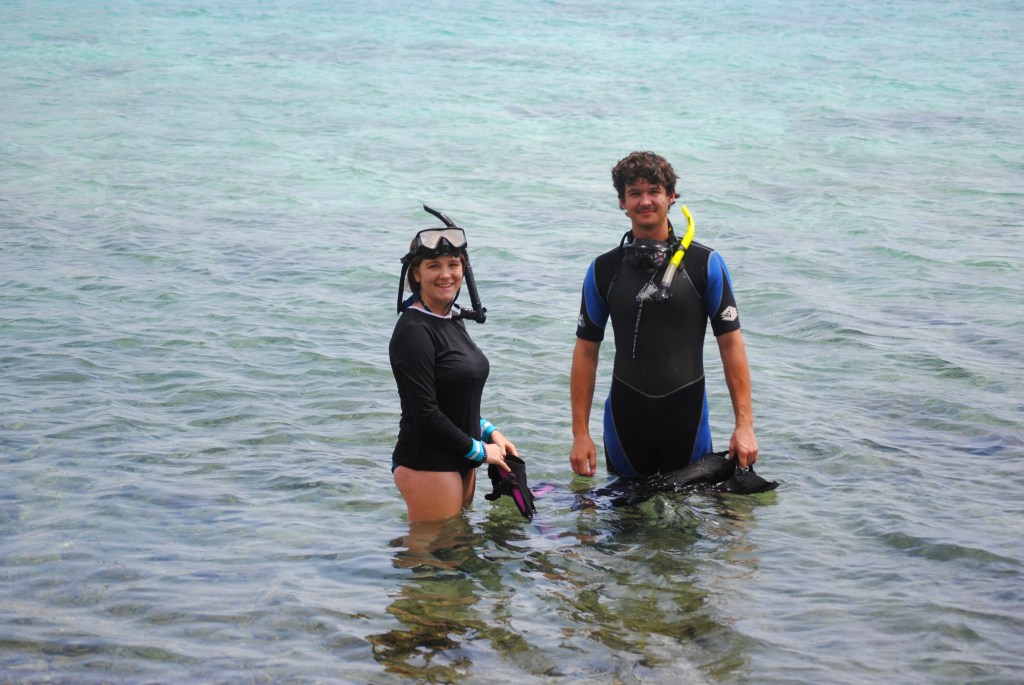


Stop at the Virgin Islands National Park Visitor Center for information on snorkeling locations.
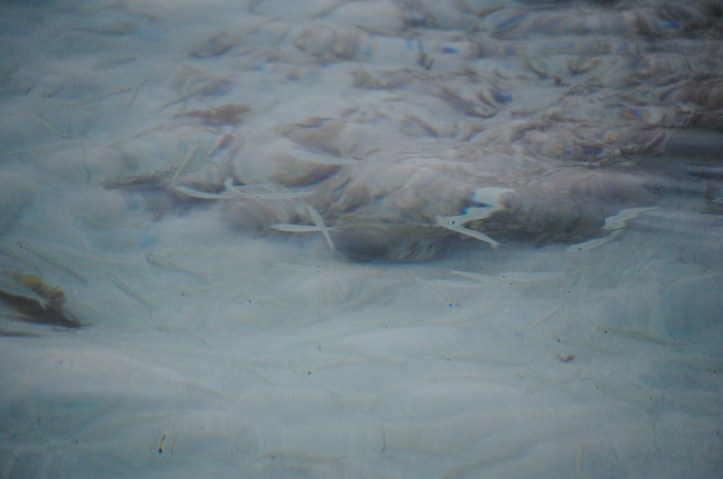
You can also rent a dinghy from Dockside Dinghy in Coral Bay to access remote locations. You must tie the boat up to a buoy if in national monument or park waters, instead of dropping anchor to protect the coral. We snorkeled in Princess Bay and Water Creek, where my son saw a huge Barracuda!
Scuba:
If you are looking for deeper water adventures, Low Key Watersports, offers scuba expeditions. Our captain Acua and underwater guide Brent were AMAZING! Even if you aren’t PADI certified, they have a discovery trip for ages 10+. On our dive we saw eels and an enormous sting ray. My favorite part of the dive was seeing the living reef as a whole ecosystem. This place is so very fragile. I am incredibly grateful to those who have worked so hard to protect it.

How to Get There:
Accessing the park requires a journey, as well it should. The national park lies on the tiny island of St. John, only 19 square miles in area. St. John is part of the US Virgin Islands which includes St. Croix and St. Thomas. There are no airports on St. John, so it is accessed by ferry or other maritime vessel. The closest airport, Cyril E. King Airport, is located on St. Thomas. To get to St. John from St. Thomas, we took a car ferry (Love City Car Ferries). When you make ferry reservations, book a car ferry, instead of a passenger ferry, if you rent a car in St. Thomas. We chose to rent a car because our vacation entailed snorkeling all over St. John and staying on the east side of the island.

Extra Tips:
Nearly 20% of the citizens of the USVI live below the poverty level, and hunger and food shortages are common among the poor. Income levels dropped precipitously after 2010, and were starkly reduced in the wake of significant hurricanes that have hit the islands in recent years, including two Category 5 hurricanes that hit in 2017, only eleven days apart.

The USVI economy depends heavily upon tourism, but it is also obvious that this source of income is taking a toll on the few precious resources available here, most especially water. Over 90% of the residents on the USVI rely on water harvesting. It is imperative to reduce your water consumption while visiting. Personally, I found the water in several locations where we stayed to be unsafe for drinking. I hate to recommend bottled water, but we did purchase several large jugs and used them to refill our personal water bottles that we brought with us from home. I also question how water harvesting is impacting the tropical desert vegetation on these water parched islands, especially on St. Thomas.
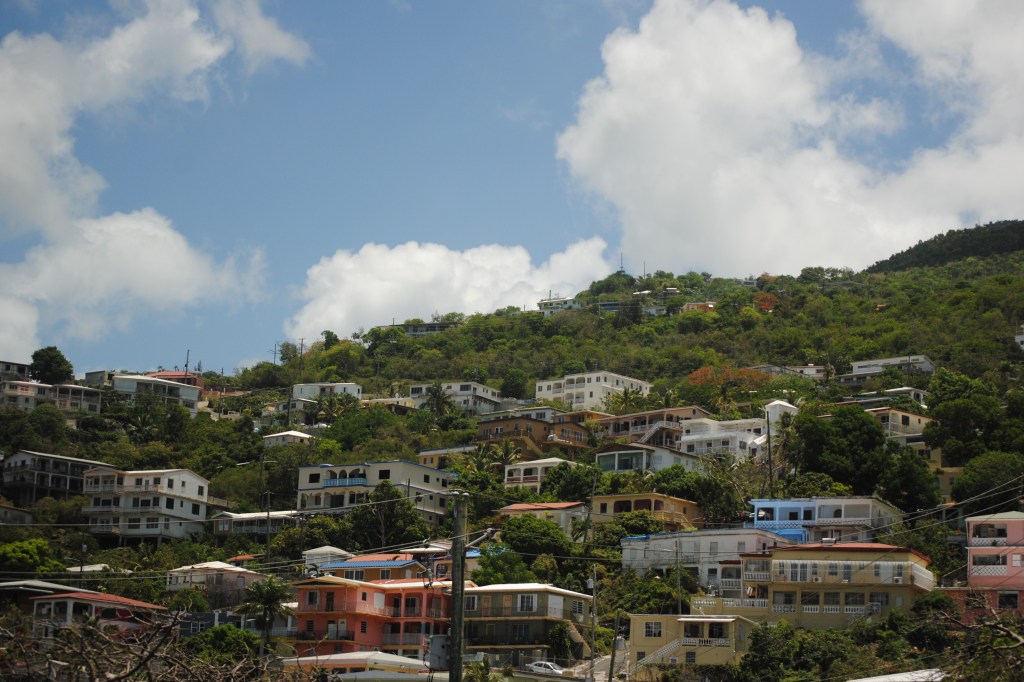
Beaches are small and sparse, due to the geology. St. John and St. Thomas are steep and rocky, with beach formation a result of parrot fish poop (yes…beach sand here is the digested remnants of coral from parrot fish poop). Additionally, access to public beaches, especially on St. Thomas has been diminished due to the sheer number of villas that have been constructed on the island. Incredibly steep, narrow, winding, and poorly maintained roads combined with increased tourism results in a traffic nightmare. St. John’s roads are equivalent to those on St. Thomas, but the national park beaches were more accessible. They were nearly vacant the further east on St. John we went.
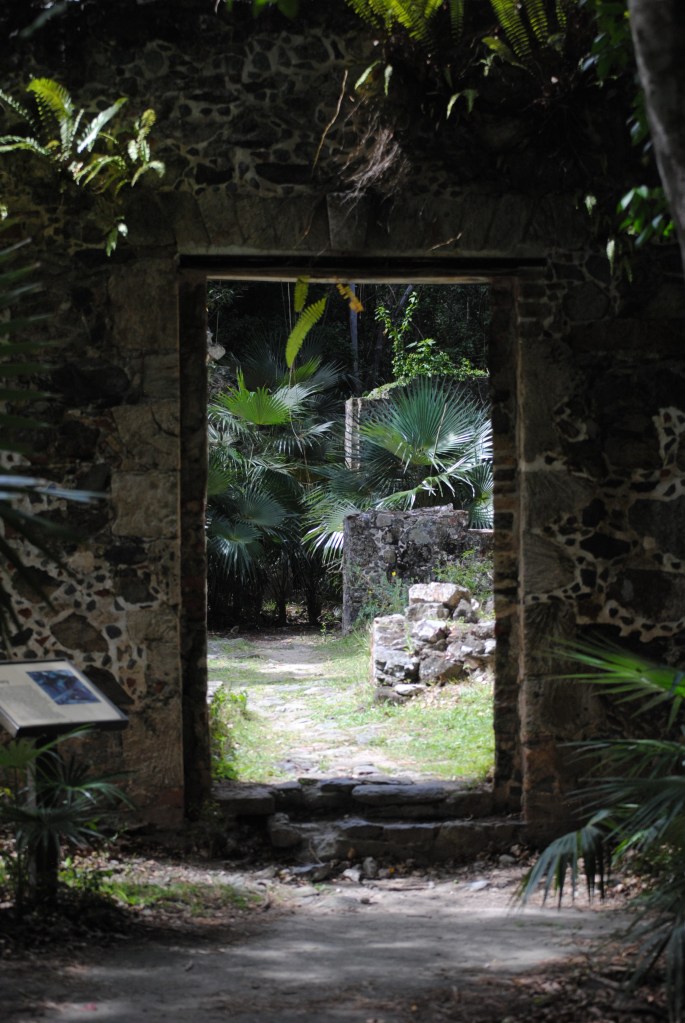
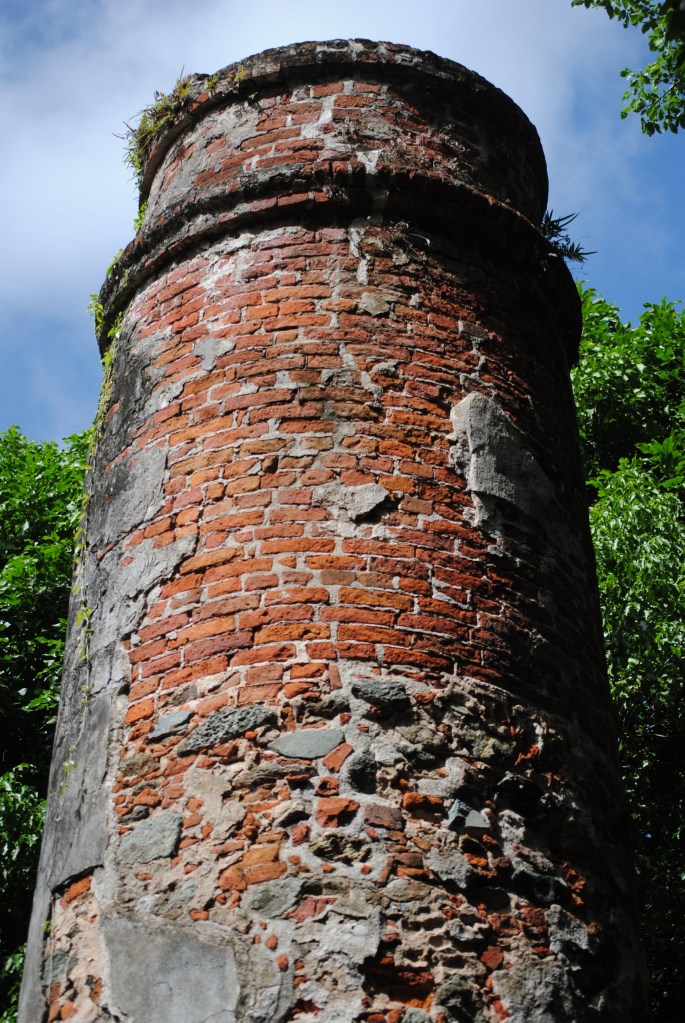
The history of slavery and racism feels omnipresent. The brutality of the slave trade that occurred on St. John from 1670’s to 1848 is readily observable at sugar plantation ruins. Approximately 70% of the population is African American/Black. Additionally, residents have limited self-governance, cannot vote for President, and have a non-voting delegate in Congress. According to Vermont Law and Graduate School, “While residents democratically elect their governor, the U.S. Government ultimately makes decisions for the U.S. Virgin Islands without their full voting participation.” From my perspective, this imbalance creates a model of second-class citizenship for many generational residents.
We were offered illicit drugs while at Sapphire Beach on St. Thomas. We politely declined, and he left us alone but had no qualms about advertising in front of our daughter.
Everyone we met and spoke to responded to us with equivalent measure of kindness and conversation, but for many only after we demonstrated a true desire for them to know we saw them as individuals. We felt safe during most of our vacation, but we avoided more populated areas. My general advice is quite simply, be vigilant. Avoid excessive drinking. Never drink and drive. Remember you are a guest. Spread the love, treat everyone with an abundance of kindness and appreciation. Island residents are offering up their home for your vacation. Treat the island and the people who live there with respect. NEVER litter, reduce your water consumption, visit with simplicity and appreciation. ALWAYS TIP WELL.
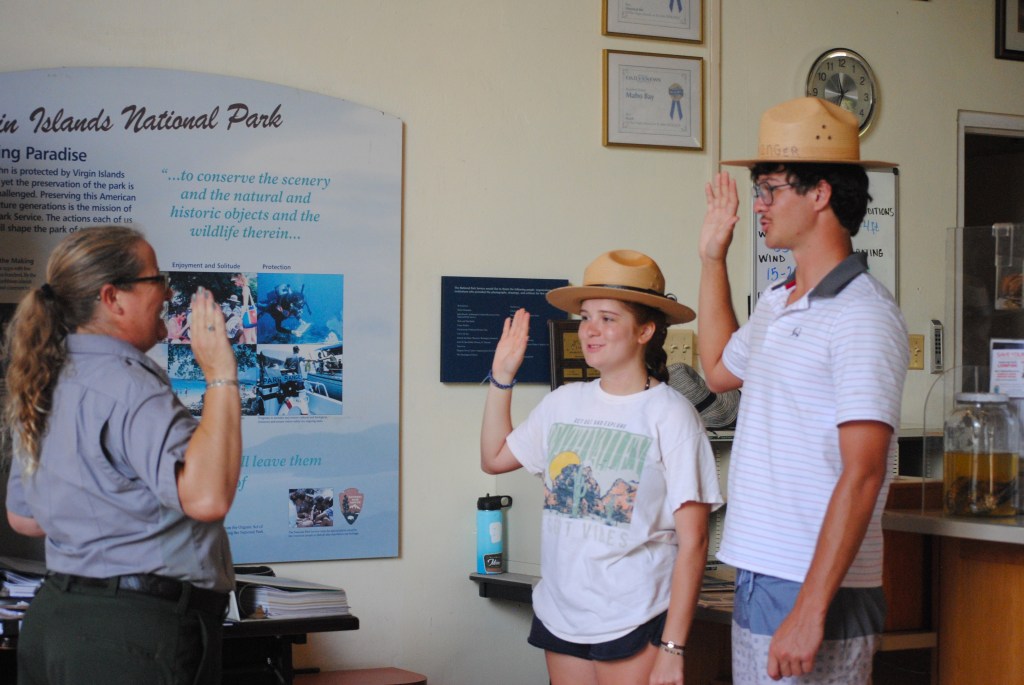
Junior Ranger Badge:
Besides earning your Junior Ranger Badge in this national park, you can also earn your Underwater Explorer Badge! Stop at the National Park Visitor Center to pick up your program booklets.
Where to Eat:
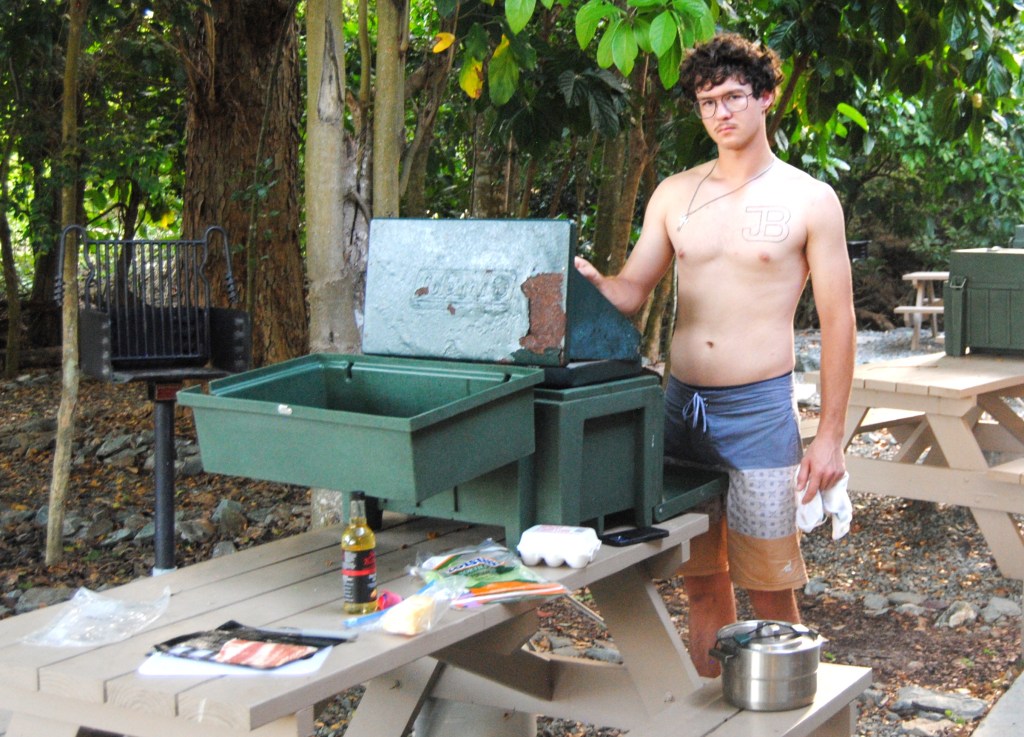
Food here is prohibitively expensive! Whether you purchase groceries and prep most of your own meals, or eat at a restaurant, prepare to pay double at a minimum. In some grocery stores, bags are not available (yay), and so you must pack items out individually. This was a bit of a challenge for us as we were not aware and purchased food for three days (for a whopping $400). Seafood is surprisingly not plentiful. The most common restaurant meal preparation is what we considered to be good Mexican food and hamburgers. Salsa on the island was spicy and flavorful! A few places we enjoyed:
St. John Scoops – a fun selection, like guava sorbet and chai ice cream. Prices were fair and it was conveniently located in Mongoose Junction. Highly recommend.
Surf Club Cantina – in Coral Bay was our favorite. They serve massive hamburgers, and excellent drinks. The owner, Bruce, was fabulous. He introduced us to the island soda Ting and educated us about the 2017 hurricanes and the incredible teamwork and efforts he took to keep the area fed during recovery. Servers are crazy friendly, and the ocean side venue is perfect.
Greengos Caribbean Cantina also located in Mongoose Junction was yummy! Their Mexican food is some of the best I have ever eaten. The service was quick, and we thought their prices were comparatively reasonable. They also did not require reservations, unlike many in the immediate vicinity.
When to Go:
Year-round daily temperatures average between 76- and 86-degrees Fahrenheit. Unfortunately, while visiting the first week of June, we were under a heat advisory with temperatures approaching the low 90s. It was hot and muggy, but if you spend most of your time cooling off in the water you can tolerate the heat. Winter and early spring are probably the most pleasant.
Where to Stay:
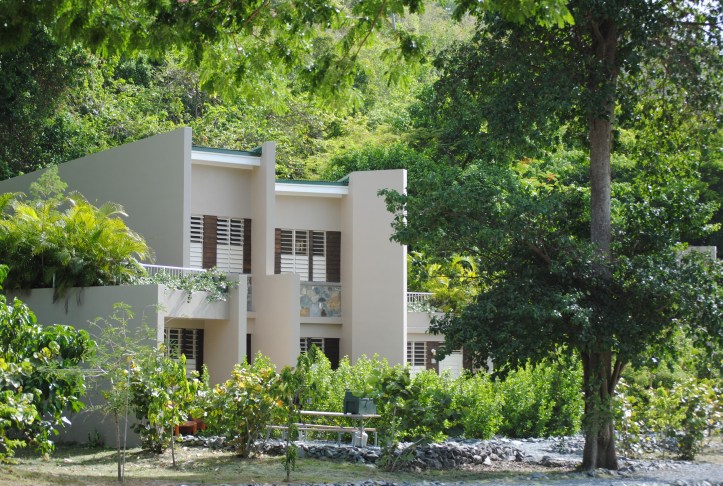
We spent 2 nights at Cinnamon Bay Beach and Campground, St. John. This is the only campground located within Virgin Islands National Park. Accommodations consist of either elevated canvas tents or cottages. There is no air conditioning in either. They have concrete floors, and rustic kitchen sets on the picnic table outside. The linens were clean and included bedding and towels. Bathrooms are central outdoor facilities with outdoor enclosed showers, which were a fun experience. Everything was very clean. Cinnamon Bay Beach is gorgeous, especially at sunset.
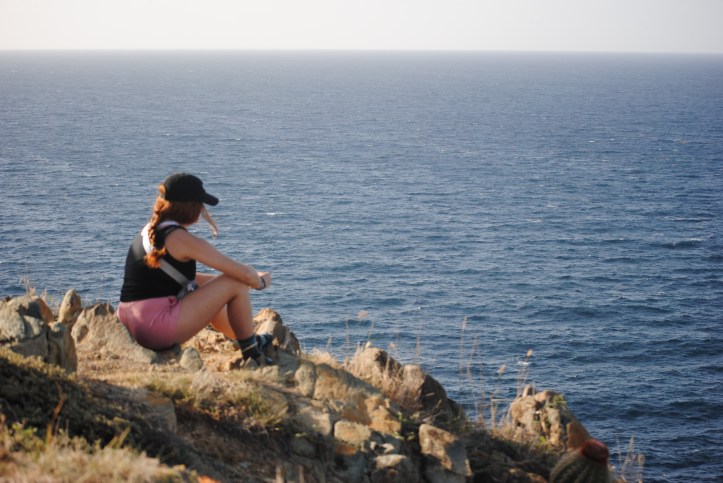
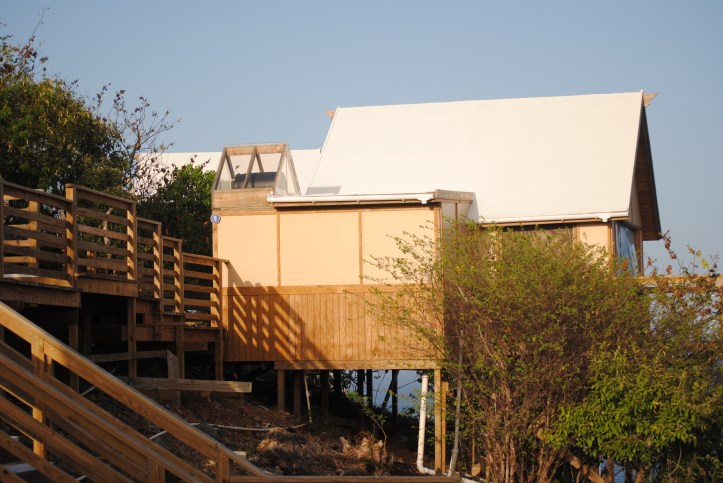
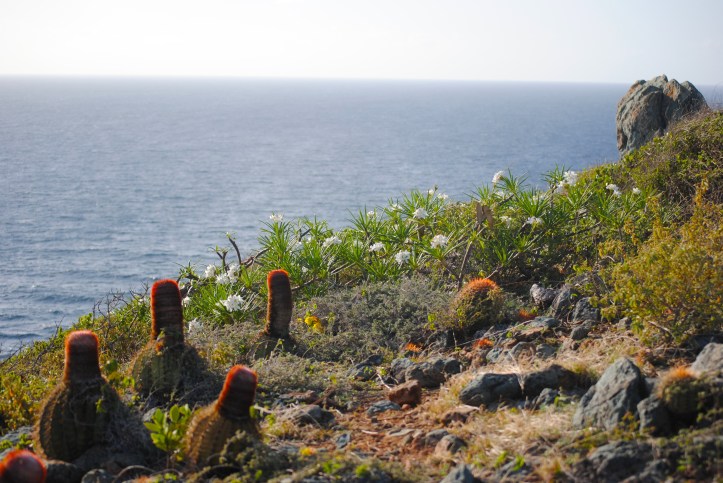
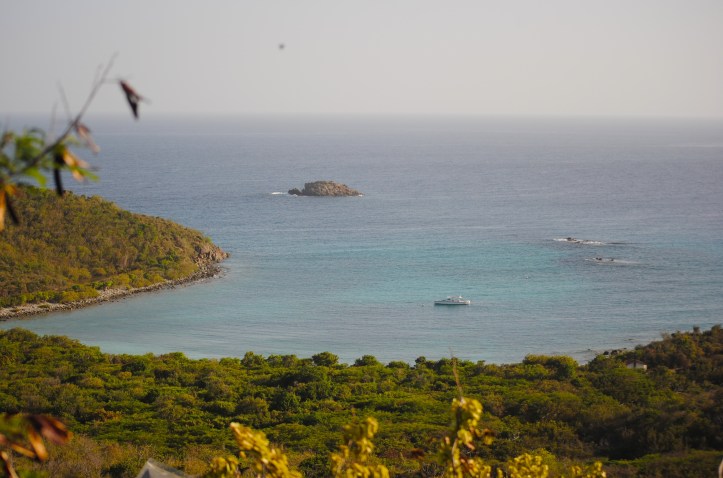
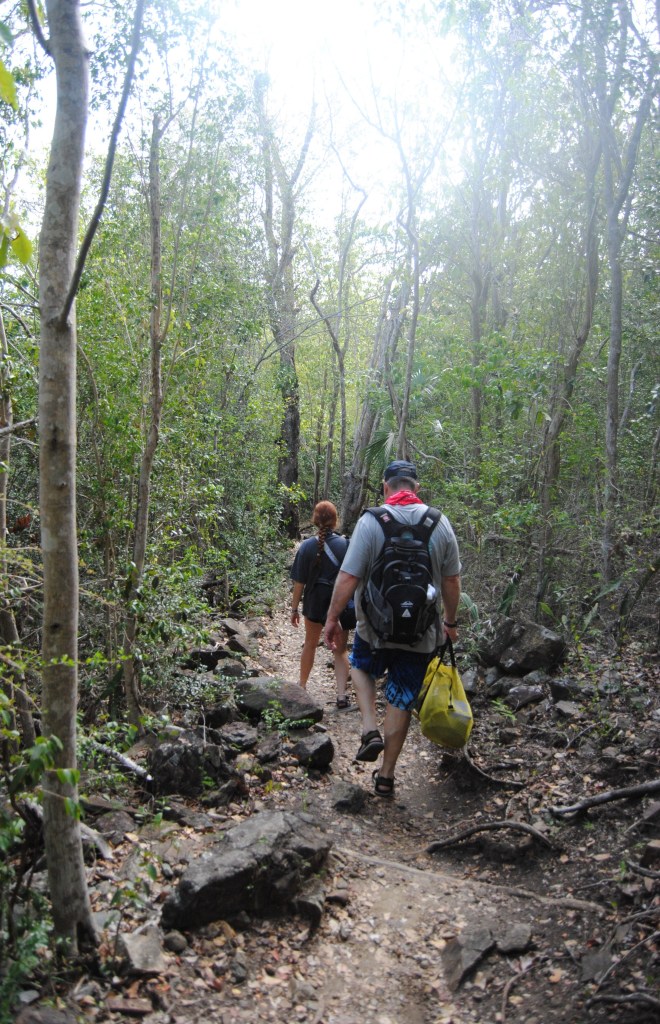
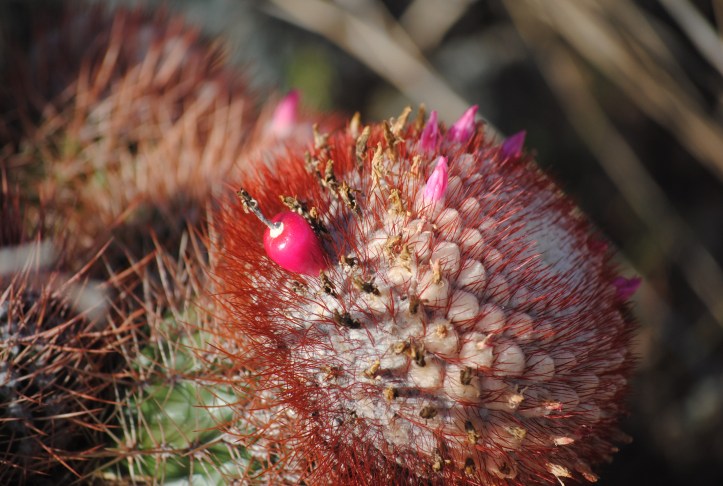
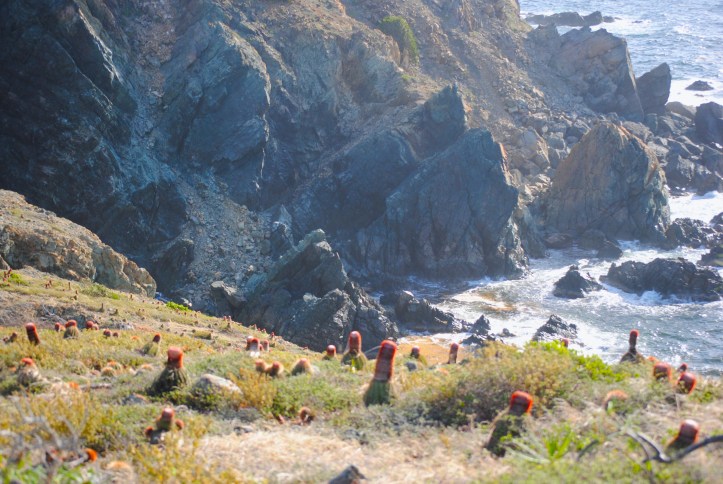
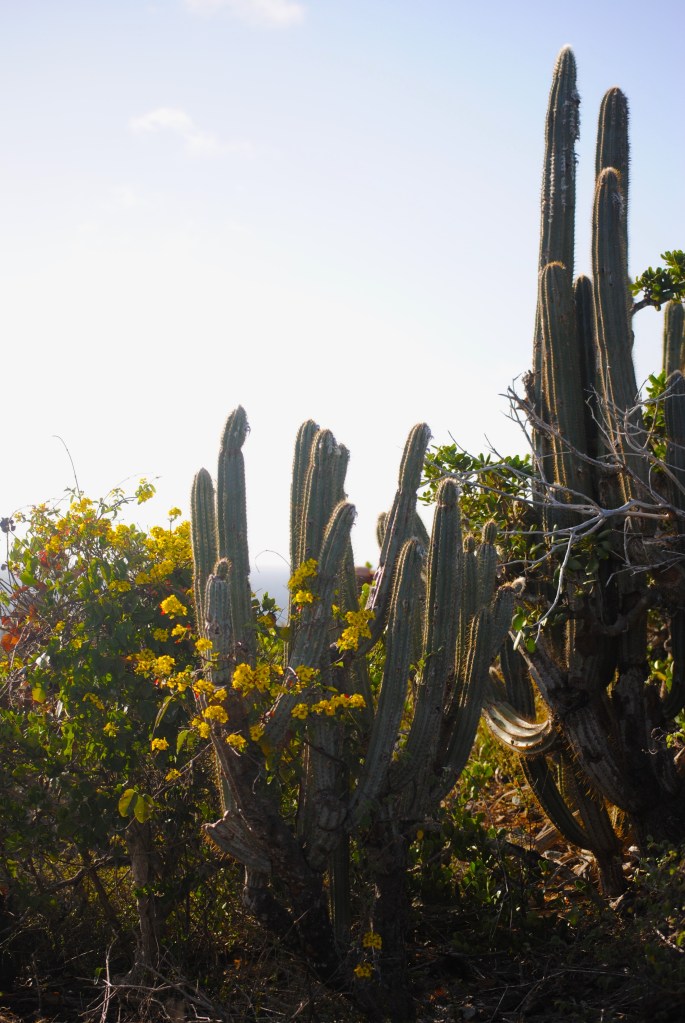
We spent the next 2 nights at the Concordia Eco Resort near Coral Bay on St. John. We absolutely loved these accommodations, but they are rustic. Our room was a canvas covered A-framed treehouse-like structure. It contained a fridge, sink and small cook stove. Restroom accommodations were interesting, with only a billowing shower curtain separating the toilet/shower area from the remainder of the room. This side of the island is serenely quiet. It is located adjacent to the national park boundaries, so the natural beauty of the island is well preserved. You can walk to Salt Pond Bay for snorkeling – it has some of the best on the island. Plan to hike to Ram Head. We started around 6:00 AM, to avoid the heat. Imagine being perched at the edge of the world, surrounded by exotic plants and animals!
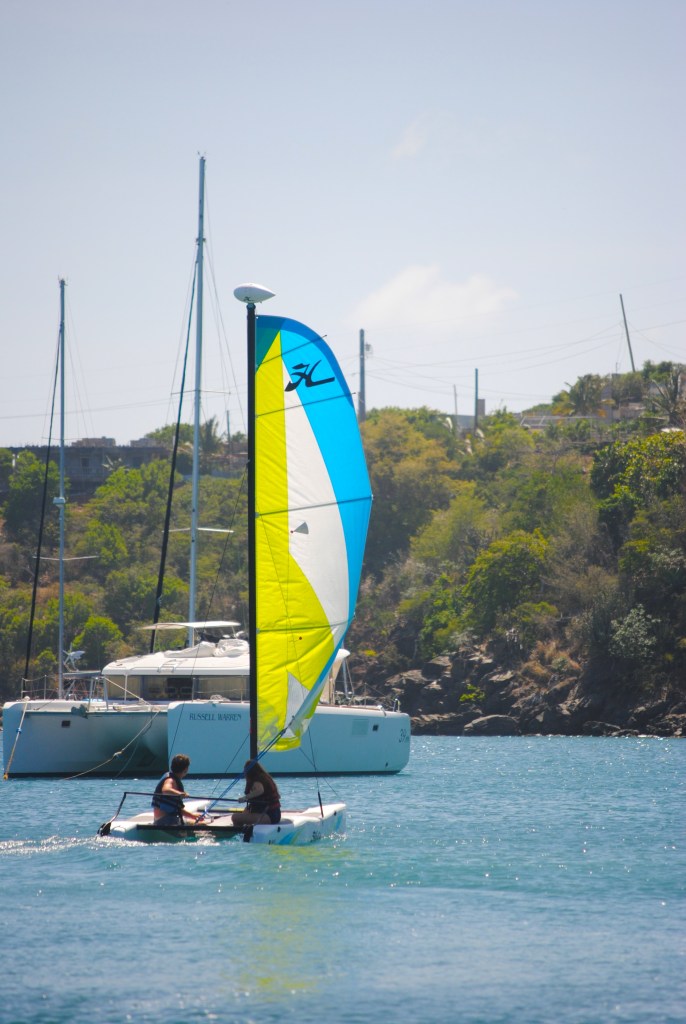
The next 2 nights were spent at the Westin St. John. This is a typical island resort experience. The rooms were exceptionally clean, and beautiful. Air conditioning was certainly welcoming. Food and drinks were monumentally expensive. The pool is gorgeous, and they do have their own beach on the bay. My kids were able to take out a small catamaran and teach themselves to sail! What it makes up in amenities is lost in the removed natural beauty of a tropical island. This is a commercial location and feels very different than the north or east side of the island.
Remember:
- You can be sun-burned while snorkeling, on your backside, in a short amount of time. This is as painful as it sounds. I highly recommend long sleeve cover up swimsuit tops and swim shorts, and lots of sunscreen frequently applied. Don’t forget the backs of your legs!
What to Bring from Home:
- You must use reef-safe sunscreen. It is very expensive on the island, remember to bring your own. I prefer Blue Lizard.
- Stuff some CLIF Bars, or other breakfast bars in your suitcase. Food here is insanely expensive, and cutting back on breakfast costs would be a great way to trim your vacation budget.
- Bring a small personal fan, if not staying where there is air conditioning.
- Sand fleas and mosquitos are wicked. Insect repellent is a must. We came home covered in bites.
- You should bring your own snorkeling gear with you, at a minimum mask and snorkel. We put all of ours in one checked bag.
- Portable beach chairs The ones we brought were lightweight and inexpensive..
- Travel towels. Bring your own for the beach because you may have to rent one at your hotel.
- Reusable Water Bottle. You can fill it with water or make your own cold drinks to take with you to the beaches.
Social and Environmental Impact
An unexpected sadness washed over me when we visited this park. I want so much to tell you of the paradise, how marvelously wonderful your time here will be. If you look and listen with that part of your soul that senses the unspoken, that part of you that awakens when you see beauty altered, there are things you will notice. First, the local people here have a very difficult time. Second, the national park and monument protect highly visited tiny little bays of a fragile nature.
So I must ask you to consider the following:
Make a donation to help the residents of St. John. We are donating to Catholic Charities of St. John this year.
Make a donation to Friends of Virgin Islands National Park when at the National Park Visitor Center or online. This affiliated organization hosts educational and conservation activities.
For many reasons, we have chosen to donate to The Nature Conservancy to offset the carbon emissions we produce while traveling. This is how I calculated the amount of our donation for this trip:
It is estimated that the carbon dioxide emissions per mile per passenger is 0.40 pounds of CO2.
One round trip ticket from Houston to St. Thomas = 4134 miles
4134 miles x 0.40 pound of CO2 per mile = 1653.6 lbs of CO2
1653.6 lbs x 1 ton/2000 lbs = 0.83 tons of CO2 per person per trip to USVI
0.83 tons of CO2 per person per trip x 4 = 3.3 tons of CO2 emitted by air travel to and from Houston to St. Thomas by our family.
Suggested offset donation amounts vary between $10 and $80 per ton of CO2 emitted. We used an average of $45/ton. So, the amount of our donation will be 3.3 tons x $45 per ton = $148.50
Posted on: June 18, 2023
Visited: June 2023
 National Park Adventures